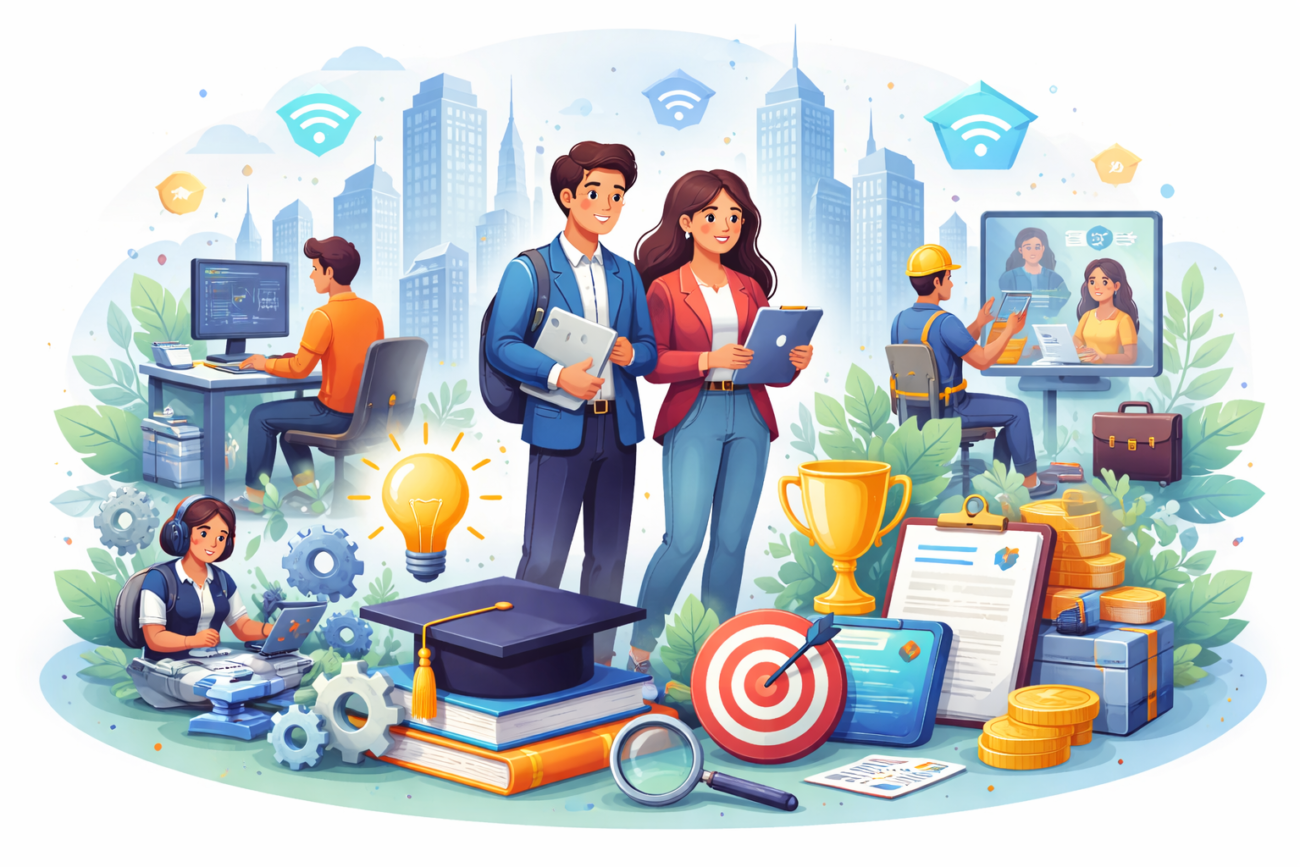
The career journey of India’s youth in 2026 is being shaped not just by academic degrees, but by practical skills, adaptability, and access to the right opportunities. As industries evolve rapidly due to technology and globalization, employers are increasingly prioritizing problem-solving ability, digital fluency, and continuous learning over traditional qualifications alone. This shift is redefining what it means to build a successful and sustainable career.
Recent employment data highlights a growing concern: only a small fraction of graduates are employed in roles that directly align with their academic backgrounds. This mismatch between education and employment markets reflects gaps in curriculum relevance, industry exposure, and career guidance. Many young professionals find themselves underemployed or forced to reskill soon after graduation to remain competitive.
To address this challenge, skill development initiatives have taken center stage across the country. Programs under the Skill India Mission, along with National Skill Expo events and state-led training schemes, are focusing on equipping learners with industry-relevant competencies. These include digital literacy, data analysis, AI readiness, cybersecurity awareness, and hands-on vocational expertise that align with emerging job roles.
Such platforms play a critical role in bridging the divide between classroom learning and workforce demands. Through workshops, certification courses, apprenticeships, and mentorship programs, students gain exposure to real-world applications of their knowledge. Career guidance sessions and employer interactions further help candidates understand evolving industry expectations and career pathways.
At the same time, the rise of hybrid work models, gig opportunities, and startup culture is encouraging young professionals to explore flexible and non-traditional career options. Freelancing, remote roles, and project-based work are becoming viable long-term career choices, especially for those with specialized digital or creative skills. This shift demands strong self-management, adaptability, and continuous upskilling.
Ultimately, building a competitive career in 2026 requires a proactive mindset. By combining formal education with skill-based training, industry exposure, and lifelong learning, India’s youth can better navigate the changing employment landscape. As opportunities diversify, those who remain agile, informed, and skill-ready will be best positioned to succeed in the future job market.
