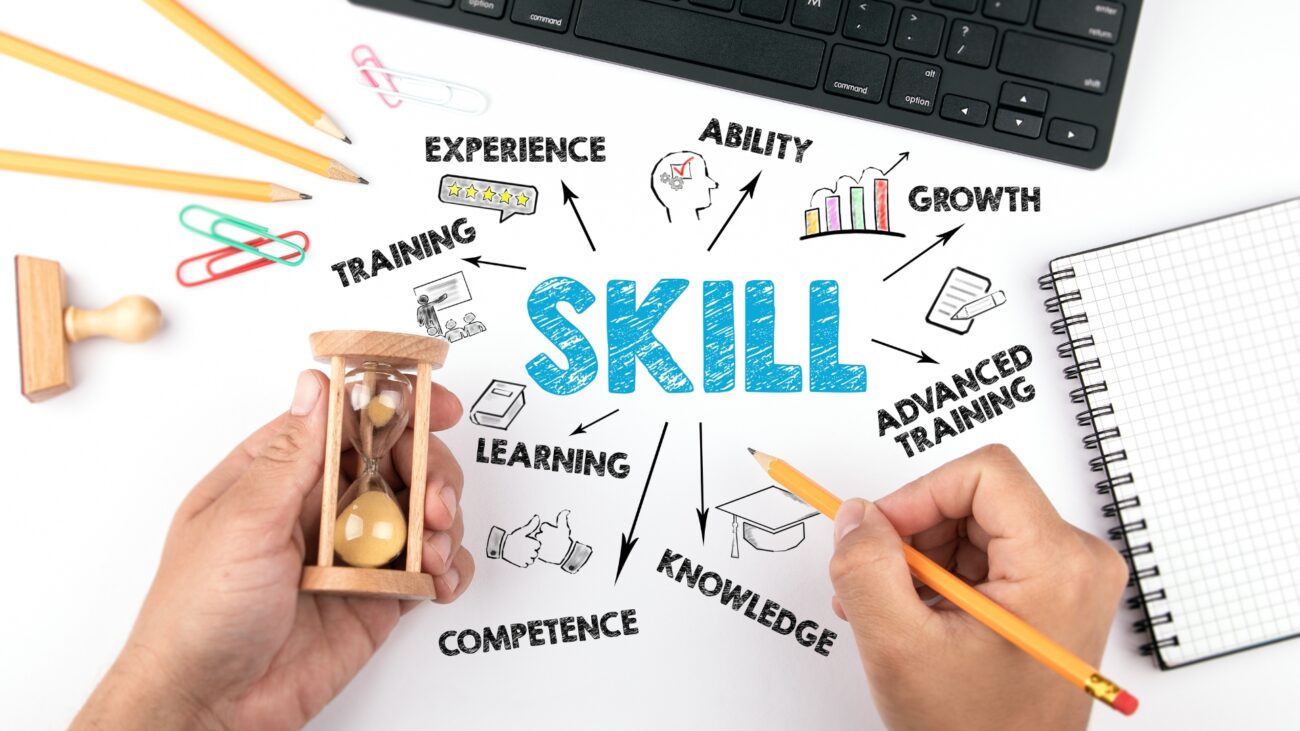
The global workforce has officially crossed the threshold into a “skills-first” economy, where the value of a professional is no longer measured by a one-time degree but by their “learnability index.” As we navigate 2026, the shelf-life of technical skills has plummeted to an average of just two and a half years, driven by the relentless integration of agentic AI and green technologies. This shift has replaced the traditional linear career path with a model of continuous, modular growth. Today, success belongs to those who view their professional identity as a “work in progress,” constantly layering new competencies onto a foundation of radical adaptability.
One of the most significant shifts this year is the move from broad AI literacy to “Augmented Intelligence” mastery. It is no longer enough to simply know how to use a chatbot; the market now demands “AgenticOps” skills—the ability to supervise and orchestrate autonomous AI agents that handle end-to-end workflows. Professionals are increasingly functioning as “Human-in-the-Loop” (HITL) directors, focusing on prompt engineering, output validation, and ethical oversight. This transition allows workers to delegate routine cognitive labor to digital coworkers, freeing them to focus on high-order strategic reasoning and complex decision-making that machines cannot yet replicate.
As technical roles become more automated, “Human-Centric Skills”—once dismissed as soft skills—have become the new “hard” competitive advantage. Emotional intelligence, cross-cultural empathy, and ethical judgment are now the primary differentiators in hiring. In a world of hybrid and remote global teams, the ability to build trust and navigate ambiguity is essential. Leadership in 2026 has evolved from command-and-control to coaching and change-enablement, where managers are responsible for fostering psychological safety and resilience as their teams navigate constant technological disruption.
Micro-credentials and “Skill Frameworks” have replaced the monolithic CV. Rather than chasing a masters degree, professionals are stacking nano-degrees and industry-recognized certifications that can be completed in weeks. These “just-in-time” learning modules are often embedded directly into daily software—a trend known as “Learning in the Flow of Work.” Whether it’s a quick simulation on carbon accounting for a supply chain manager or a VR-based module on sustainable construction for an architect, education is now delivered at the exact moment of need, ensuring that theoretical knowledge is immediately converted into practical execution.
The “Green Transition” has also sparked a massive demand for sustainability-linked skills across every sector, not just in energy. From “circular economy design” to “ESG data auditing,” every role now requires an environmental lens. Governments and corporations are heavily subsidizing reskilling programs to transition workers from declining traditional industries into these high-growth green sectors. This pivot is supported by “Skill Lockers” and blockchain-verified credentials, allowing workers to seamlessly carry their verified “green credits” across different companies and even international borders.
Financing professional development has become more democratic through the rise of “Learning Wallets” and employer-sponsored “Continuous Learning Stipends.” Companies are moving away from one-off annual training events toward a permanent “development ritual.” High-performing organizations now allocate a fixed percentage of work hours to self-directed learning, recognizing that the ROI on human talent development exceeds almost any other technology investment. By providing personalized, AI-curated pathways, these organizations ensure that upskilling is not a burden but a highly rewarded part of the job description.
Ultimately, 2026 is the year we stop “going to school” and start “living in school.” The boundary between working and learning has blurred into a single, immersive experience. As AI continues to evolve from a tool that “talks” to a system that “does,” our uniquely human capacity for creativity, ethics, and strategic intent becomes more valuable than ever. By embracing this digital and human hybridity, professionals are not just surviving the 2026 skills revolution—they are leading it.
