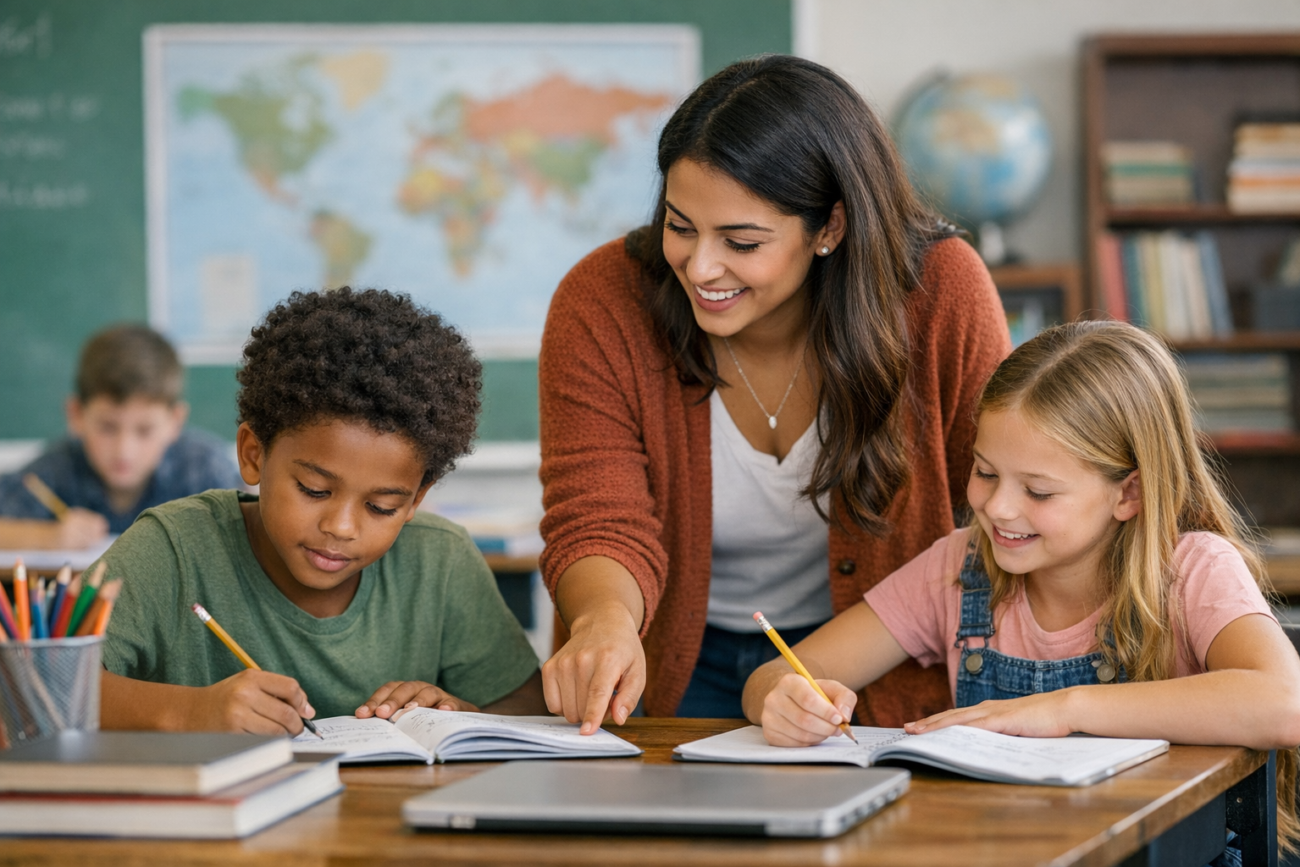
Education is more than marks and degrees; it is the foundation that shapes thinking, values, and opportunities for every person in society. From a young age, learning helps children understand the world, communicate better, and make informed choices about their future. In today’s competitive and fast-changing world, education also decides how confidently a person can face challenges and adapt to new situations.
Formal schooling gives students structured knowledge in subjects like language, mathematics, and science, but its real purpose is to develop critical thinking and problem-solving skills. Classrooms that encourage questions, discussions, and creative projects help students become active learners instead of passive listeners. When teachers use clear explanations, short paragraphs, and real-life examples, students connect lessons to their own experiences more easily.
Modern education is no longer limited to textbooks and blackboards; technology has opened new doors for both teachers and learners. Online platforms, videos, and interactive tools allow students to learn at their own pace and revisit difficult concepts whenever they need. This flexibility is especially useful for those who live in small towns, work part-time, or prepare for competitive exams alongside other responsibilities.
Education is also about character, emotions, and values, not just academic performance. When schools talk about mental health, empathy, and respect, students learn how to handle stress and build healthy relationships. Activities like group work, sports, arts, and community service teach responsibility, teamwork, and kindness, which are essential for a peaceful society.
One of the most important ideas in today’s world is lifelong learning, which means continuing to learn at every age, not only during school or college. New skills, such as digital literacy or communication, help people stay relevant in their careers and open new job opportunities. Lifelong learners are often more confident and adaptable because they see change as a chance to grow instead of something to fear.
In the future, education will become even more personalized, practical, and global. Concepts like blended learning, project-based learning, and skill-based courses will help students prepare for real-world challenges rather than only memorizing facts for exams. When families, teachers, and communities work together to support education, every child gets a better chance to build a meaningful and successful life.
