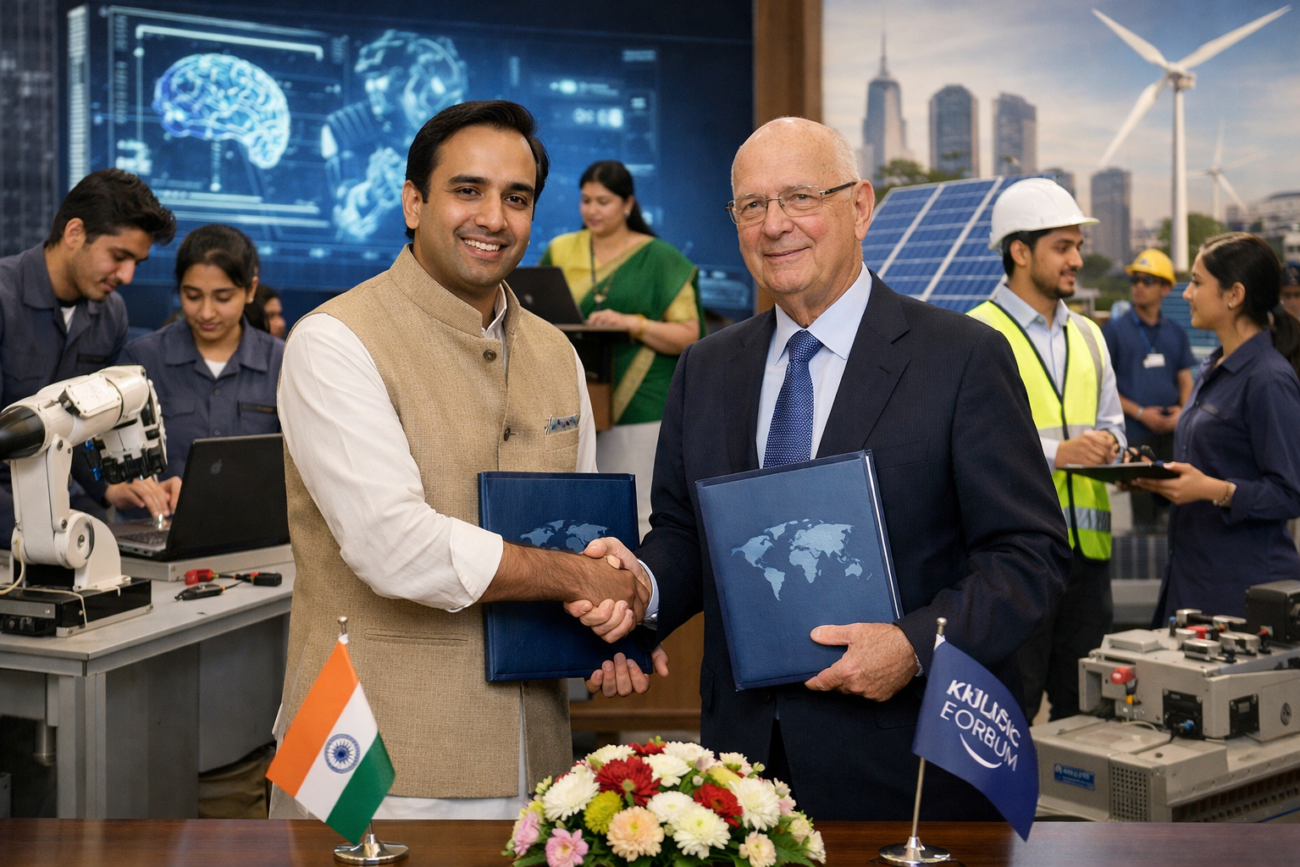
India’s skill development landscape is undergoing transformative changes in 2026, driven by strategic partnerships and policy reforms aimed at equipping the youth with future-ready competencies. The Ministry of Skill Development and Entrepreneurship (MSDE) recently signed a pivotal Memorandum of Understanding (MoU) with the World Economic Forum (WEF) on January 22, 2026, to launch the “Skills Accelerator” platform. This multi-stakeholder initiative focuses on bridging critical skill gaps in emerging sectors like artificial intelligence, green energy, robotics, and advanced manufacturing, enhancing global employability for over 500 million young Indians.
The Skills Accelerator emphasizes public-private partnerships, outcome-based financing, and lifelong learning to align India’s workforce with global labor market demands. MSDE Minister of State Jayant Chaudhary highlighted how this collaboration unites government, industry, and education to foster coordinated action against current and future skill shortages. By scaling innovative solutions through skill centers, Industrial Training Institutes (ITIs), and polytechnics, the program promises practical, job-oriented training that converts India’s demographic dividend into economic strength.
Complementing this, the “Kaushal Manthan” consultations concluded on January 1, 2026, finalizing the Skill Resolutions 2026 framework. These resolutions prioritize responsive skilling ecosystems, seamless learning pathways from school-to-work, and integration of credit frameworks for mobility and lifelong upskilling. Key focuses include a National Federated Skill and Workforce Registry, a National Trainer Framework, strengthened apprenticeships, and MSME involvement to boost training quality and certifications.
Adding to the momentum, India plans its first nationwide Adult Skill Assessment Survey in 2026 to map workforce competencies and inform targeted interventions. This data-driven approach will address gaps in vocational training, ensuring policies reflect real-time industry needs amid rapid technological shifts. Such assessments mark a shift toward evidence-based skilling, vital for sectors like IT, manufacturing, and renewable energy.
These developments align with broader Digital India goals, where skill enhancement supports innovation and job creation. For tech-savvy professionals and content creators in regions like Uttar Pradesh, opportunities abound in React-based edtech platforms and policy-focused blogs on upskilling. Industry leaders like Sanjiv Bajaj of Bajaj Finserv underscore the urgency, noting that effective skilling is key to India’s economic leadership.
Challenges persist, including state-industry convergence and monitoring mechanisms, but 2026 resolutions aim to resolve them through enhanced outcomes and apprenticeships. As NSDC collaborations expand, such as with Saudi Arabia for global training exchanges, India’s youth stand poised for empowered careers. This wave of initiatives signals a robust commitment to a skilled, competitive workforce ready for the global stage.
