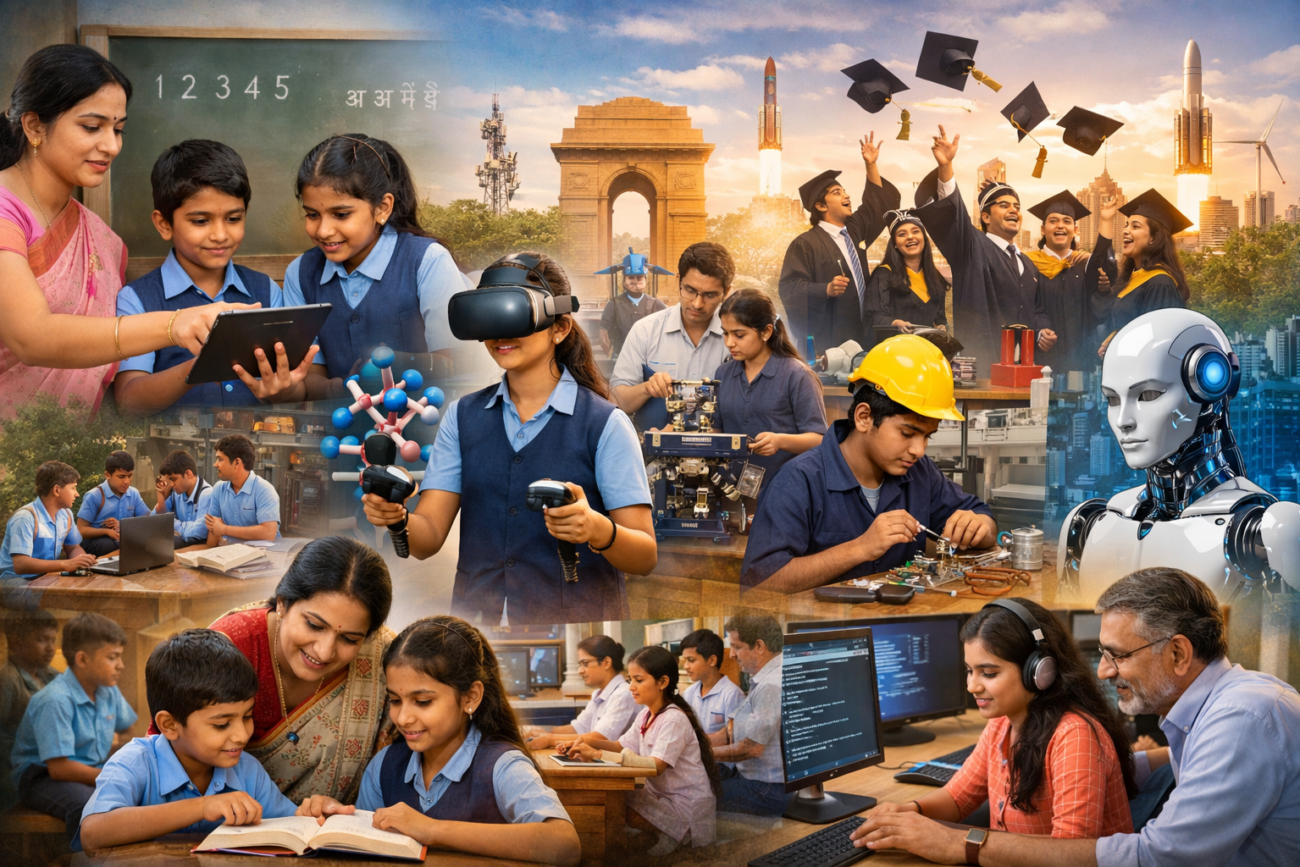
India accelerates National Education Policy (NEP) 2020 implementation in 2026 through Samagra Shiksha 3.0, targeting universal enrollment up to Class XII and foundational literacy for 100% primary students by aligning states with Viksit Bharat@2047 goals. The 5+3+3+4 structure rolls out in 35% of schools nationwide, dissolving rigid arts-science streams for flexible multidisciplinary paths and introducing coding plus vocational training from grade 6 across 50+ skill tracks. States like Rajasthan and Uttar Pradesh lead with competency-based assessments in 5,000 pilot schools, reducing rote learning by 43% through semester exams emphasizing problem-solving.
CBSE’s 2026 board reforms mandate hybrid learning in 45% institutions, integrating AI-powered doubt-solving platforms and VR labs in 2,500 schools for immersive experiential education. Mother tongue instruction up to grade 5 supports 22 regional languages, boosting comprehension by 30% in rural areas via DIKSHA and PM e-VIDYA’s multilingual content reaching 15,000 schools. National Credit Framework enables seamless higher education entry-exit with credit banking, while automated answer evaluation adopts in 74% boards cutting administrative time by 75%.
Budget 2026 allocates ₹500 crore for AI Centers of Excellence and 50,000 Atal Tinkering Labs by 2031, prioritizing teacher training in EdTech for 10-15% budget share amid 64-point rural connectivity gaps. Sarva Shiksha Abhiyan integrates digital reforms like SWAYAM online courses and National Digital Library, targeting 85% literacy through remedial programs for at-risk students via data analytics. Equity focus empowers socio-economically disadvantaged groups with inclusive tools and special needs support.
Higher education embraces electives in AI, Design Thinking, and computational subjects, preparing graduates for emerging careers with 67% improved employability via hands-on tracks. States ramp up ahead of 2026 academic year with skill development and digital infrastructure missions aiming 100% school internet by 2027, backed by continuous monitoring. NEP’s pedagogical shifts promote active, technology-integrated learning over theoretical focus.
Challenges like teacher shortages and uneven rollout persist, prompting nationwide consultations for Samagra Shiksha 3.0 roadmap from 2026-27 cycle. Digital India synergies embed edge AI in classrooms, aligning education with defense startups’ innovations under PM Modi’s youth vision. These reforms position India for knowledge economy leadership, blending holistic growth with global competitiveness.
