Scholarship news in early 2026 is a mix of fresh opportunities and growing frustration, as some schemes open new doors while others struggle with delays and reduced funding. Students across India are navigating shifting timelines, changing amounts, and expanding international options as they try to keep their education plans on track.
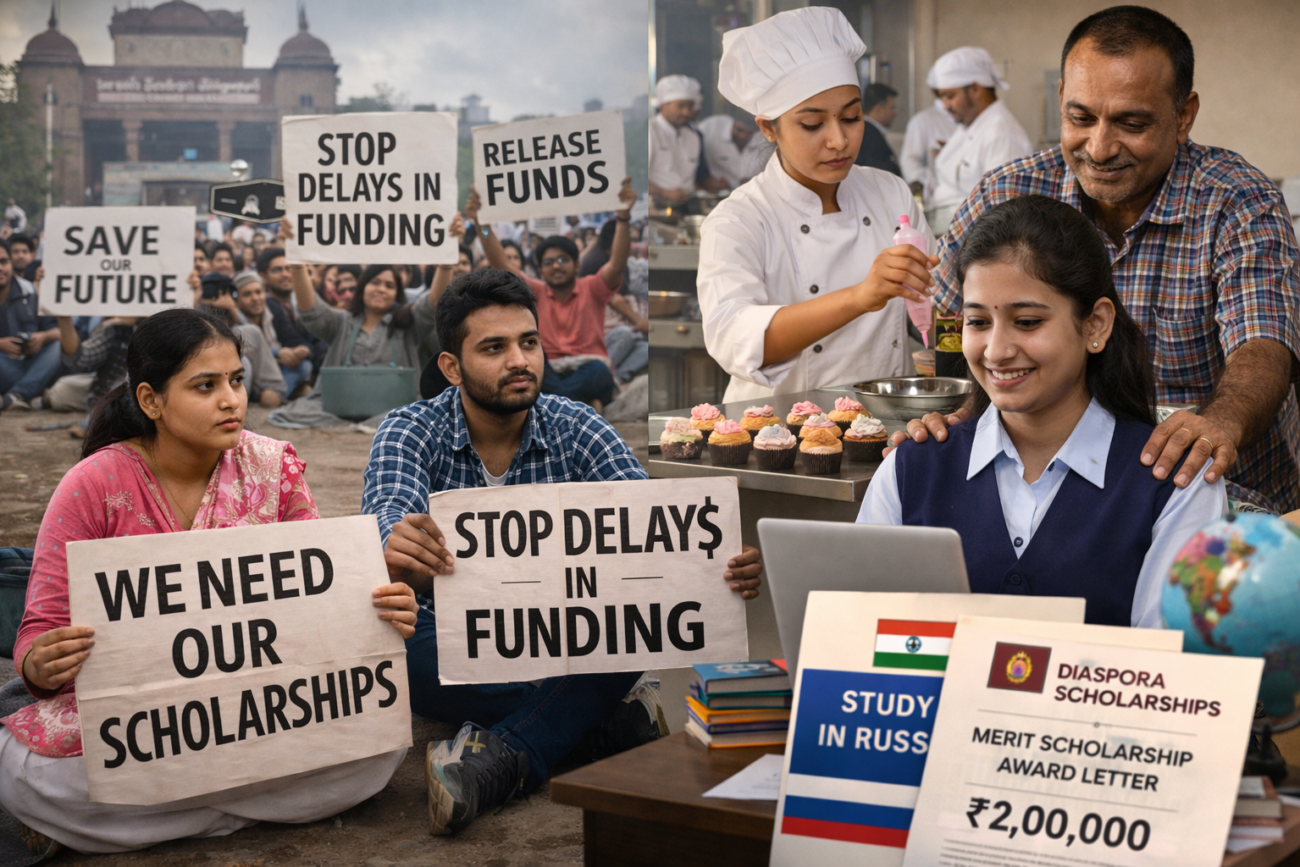
In Karnataka, students of the University of Agricultural Sciences, Dharwad, are protesting against severe delays and cuts in government and university scholarships, highlighting the pressure on OBC and minority learners. Activists say scholarships that once covered about half of college fees (around ₹38,000) have reportedly dropped to about ₹15,000 even as annual college and hostel charges have risen to roughly ₹1.25 lakh, leaving many unable to afford basic expenses. They also allege that nearly ₹50 crore due to the university has not been released for two years, hampering both student support and campus infrastructure.
Amid these concerns, sector-specific institutions are trying to fill gaps with targeted support, such as the Institute of Bakery & Culinary Arts (IBCA) in New Delhi extending its scholarship application deadline for the 2026 batch. IBCA is offering scholarships ranging from about ₹25,000 to ₹1,00,000 for more than 400 students pursuing bakery and culinary arts diplomas and certificates, with applications open until 15 January 2026. The institute emphasizes strong industry linkages and global affiliations, positioning these awards as a pathway into hotel and restaurant careers for passionate aspiring chefs.
For students looking abroad, new and continued schemes are expanding options in both traditional and non-traditional destinations. India has opened applications for around 150 seats under the Scholarship Programme for Diaspora Children (SPDC) for the 2025–26 academic year, aimed at overseas Indians seeking higher education in India. In parallel, a scholarship call supported via UGC channels is inviting Indian students to study in Russia, with online applications open until 15 January 2026 and financial support determined by host universities.
Domestic philanthropy-led initiatives are also scaling up, particularly for underrepresented groups like first-generation and girl students. The Azim Premji Scholarship, which piloted support for over 25,000 girl students from government schools in selected districts of Madhya Pradesh, Rajasthan, Uttar Pradesh, and Jharkhand, is moving into new cycles with application and renewal windows extending into January 2026 for earlier cohorts. The scheme typically offers about ₹30,000 per year for the full duration of undergraduate degrees or diplomas, helping cover tuition and related educational costs.
Large private foundations continue to shape the scholarship landscape at the undergraduate level, especially for low- and middle-income families. The Reliance Foundation Undergraduate Scholarships, for instance, support about 5,000 meritorious first-year students annually using a merit-cum-means model, with up to ₹2 lakh available over the full course of a degree for those from households earning under roughly ₹15 lakh per year. Although the 2025–26 application window has closed, the program’s stories highlight how such funding can ease fees and exam preparation burdens while offering mentorship and alumni networks.
Central digital platforms remain the main gateway for many government schemes, even as students complain about processing delays. The National Scholarship Portal continues to list central, state, and UGC/AICTE scholarships in one place, but cases like the Dharwad protests show that sanction and disbursal lags can undermine policy intent on the ground. For now, students are advised to track both institutional announcements and national portals closely, as early 2026 combines tight deadlines with expanding—but unevenly delivered—financial aid options.
